
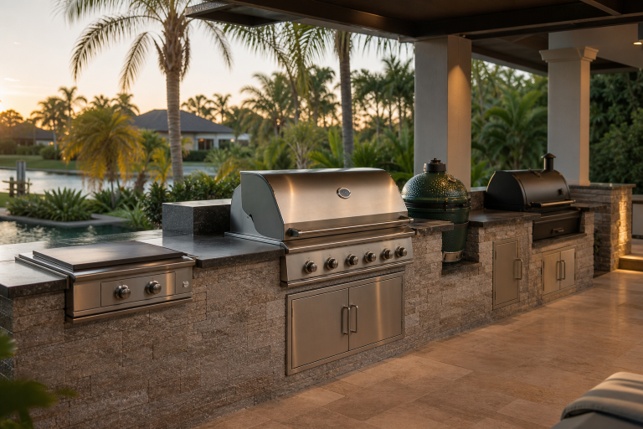
Walk through a grill showroom and it is easy to believe you need one of everything: a traditional gas grill, a flat-top griddle, a pellet smoker, and a kamado cooker.
Each one has strengths. Each one also requires space, maintenance, fuel, and money. The best outdoor kitchen is not the one with the most appliances. It is the one designed around how you actually cook.
Before choosing a grill, start with your habits—not the equipment.
The Traditional Gas Grill
A propane or natural-gas grill is the familiar all-purpose choice. It heats quickly, is relatively easy to operate, and can handle everything from burgers and vegetables to steaks and seafood.
A gas grill may be right for you if:
- You cook outside frequently
- You want quick startup and temperature control
- You prepare several foods at once
- You value convenience more than a strong smoke flavor
Built-in gas grills are popular in permanent outdoor kitchens, but they must be installed with the clearances, ventilation, and insulating components required by the manufacturer. The surrounding cabinet material matters, too.
The Flat-Top Griddle
A flat-top provides a continuous cooking surface instead of open grates. It is ideal for breakfast foods, smash burgers, fajitas, fried rice, vegetables, and smaller foods that might fall through a conventional grill.
A griddle may be a good choice if you enjoy entertaining or preparing full meals outdoors. It offers plenty of usable surface area, but it also needs regular cleaning and seasoning.
Before dedicating space to a separate griddle, ask whether a griddle plate or manufacturer-approved insert could give your existing grill similar functionality. An insert may save counter space and reduce the number of appliances you need to maintain.
The Pellet Grill
Pellet grills use compressed wood pellets and an electrically controlled feed system. They are known for steady temperatures and are especially useful for smoking and slower cooking.
Consider a pellet grill if:
- You enjoy barbecue and wood-smoke flavor
- You regularly cook brisket, ribs, pork, or poultry
- You prefer controlled temperatures over tending a live fire
- You have a convenient, dry place to store pellets
Remember that most pellet grills require electricity in addition to fuel. They also produce smoke and heat, so their location should be planned carefully rather than treated as an appliance that can be placed anywhere.
The Kamado Grill
A kamado is a heavy, insulated cooker—usually ceramic—that can grill, smoke, roast, and bake. Its ability to hold heat makes it versatile and efficient once the temperature is established.
A kamado may suit you if you enjoy the cooking process and want one appliance that can handle several techniques. It may not be the best fit if you want instant startup or regularly need a very large cooking surface.
Its weight and shape require a stable, purpose-built base. The kitchen should also be designed so the lid can open fully and hot surfaces remain safely separated from combustible materials.
Do You Really Need More Than One?
Possibly—but only if each appliance serves a purpose.
Someone who cooks quick weeknight meals and occasionally hosts friends may be perfectly happy with one good gas grill and a griddle accessory. A barbecue enthusiast may use a gas grill for convenience and a smoker for weekend cooking. A homeowner who enjoys experimenting with live fire may prefer a kamado as the centerpiece.
- What do I cook most often?
- How many people do I normally serve?
- Do I want speed, smoke flavor, versatility, or all three?
- How much time am I willing to spend cleaning and maintaining equipment?
- Where will fuel and accessories be stored?
- Will the appliance require gas, electricity, or both?
- Am I sacrificing useful counter space for equipment I may rarely use?
These questions usually reveal what belongs in the kitchen—and what does not.
Design the Kitchen Before Buying the Appliances
Buying appliances first can force the rest of the design to work around them. A better approach is to plan the complete cooking experience.
Think about prep space, landing areas beside hot appliances, lighting, ventilation, trash storage, refrigeration, serving space, and the route between the indoor and outdoor kitchens. Consider where guests will sit and whether they will be crossing the cooking zone.
Appliance dimensions are only the beginning. Manufacturer-required openings and clearances can vary, and built-in equipment should never be treated as interchangeable without checking the specifications.
Build Around the Way You Live
The right outdoor kitchen is personal. It should make cooking easier, entertaining more enjoyable, and the entire space feel connected to your home.
Banyan Living combines purposeful design with craftsmanship built for Southwest Florida. If you are deciding which grill—or combination of grills—belongs in your outdoor kitchen, request a consultation. We will help you create a space that fits the way you cook instead of simply filling it with appliances.